Table of Contents
Key Takeaways
- Simplicity vs. Scalability: Site123 is designed for speed and absolute simplicity, utilizing a section-based editor that prevents design errors but strictly limits creative freedom. It is ideal for hobbyists but restrictive for growing businesses.
- The “Renting” Trap: Closed platforms like Site123 effectively “rent” you the design and functionality. Migrating away is difficult, and you do not fully own your site’s code or data structure.
- The Professional Standard: Elementor One offers a unified platform that combines professional design, managed cloud hosting, and agentic AI. It operates on WordPress, ensuring you own your content and have unlimited scalability.
- Cost Efficiency: While simple builders appear cheap initially, tiered pricing for essential features (like e-commerce and bandwidth) often results in higher long-term costs compared to Elementor’s unified subscription model.
- AI Evolution: Site123 uses basic text generation. In contrast, Elementor’s Angie is an agentic AI that actively manages, builds, and optimizes your site, acting as a virtual team member.
About the Author
Itamar Haim is an SEO Content Specialist and digital strategy expert with over a decade of experience in the web creation industry. Having analyzed hundreds of platforms and helped shape the narratives of leading web tools, Itamar specializes in helping creators navigate the complex landscape of digital ownership, SEO, and site architecture. His insights focus on empowering users to make decisions that prioritize long-term growth and technical stability over short-term convenience.
If you are feeling overwhelmed by the sheer volume of choices, you are not alone. Most beginners start with a simple goal: get a site live as quickly as possible. However, a successful digital presence requires more than just existence; it requires performance, scalability, and absolute ownership of your assets. This comprehensive guide will analyze Site123’s capabilities through a professional lens and introduce a robust alternative—Elementor One—that empowers you to build not just a website, but a sustainable digital future.
The Trap of “Instant” Website Builders
In the early stages of a digital project, “ease of use” is often the seductive metric that drives decision-making. Platforms like Site123 capitalize on this by offering a streamlined, frictionless entry point. The promise is alluring: answer a few questions, pick a category, and have a website ready in minutes.
For a school project, a temporary event flyer, or a personal hobby blog, this approach is perfectly valid. However, for a business aiming for longevity, this “instant” convenience often transforms into “technical debt.”
The Architecture of Simplicity
Site123 operates on a rigid framework known as “section-based editing.” Unlike a true drag-and-drop editor where you have pixel-perfect control over every element, a section-based editor restricts you to pre-determined layouts.
- The Pro: It is impossible to “break” the design. Because you cannot move elements freely, the mobile responsiveness remains intact automatically.
- The Con: You look like everyone else. Your brand identity is forced to conform to the template’s structure, rather than the website adapting to your brand.
As your business evolves, you will inevitably hit a wall. You might need a specific integration for a CRM, a unique animation to highlight a product, or a custom checkout flow to increase conversions. On a closed platform like Site123, if the feature isn’t in their library, you simply cannot have it. This is the “glass ceiling” of simplified builders.
What Site123 Actually Offers
To make a fair assessment, we must look objectively at what Site123 provides. It is a functional tool designed for a specific segment of the market: those who prioritize speed over flexibility.
The Editor Experience
The Site123 interface is a sidebar-driven environment. You select a content block (e.g., “About,” “Services,” “Contact”), and the system populates it on the screen. You can edit the text and swap images, but you cannot drag a button five pixels to the left or layer an image behind a text block.
- Customization Limits: You can change global color palettes and font pairings, but individual element styling is restricted.
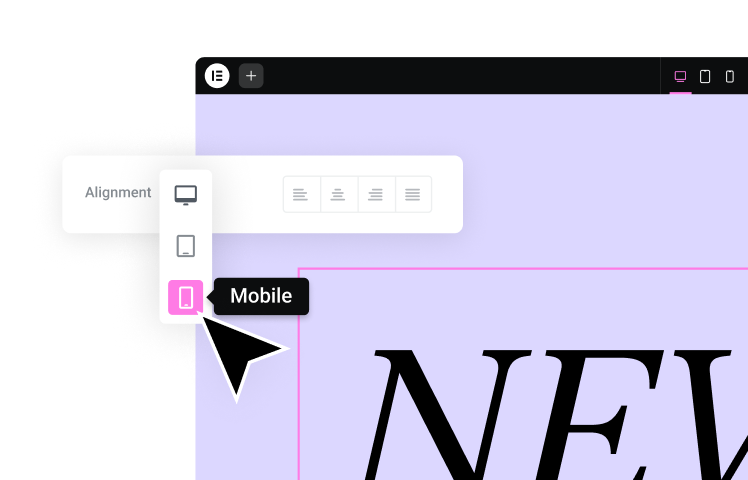
- Responsiveness: The sites are mobile-responsive by default, but you cannot customize the mobile view independently. You cannot hide specific elements on mobile or adjust padding for smaller screens specifically.
Functional Capabilities
- E-commerce: The platform supports basic e-commerce. You can upload products, set prices, and process payments via major gateways like PayPal and Stripe. It handles digital products and physical goods but lacks advanced features like complex shipping classes, bulk discounts, or deep inventory management integrations.
- SEO Tools: Site123 provides a basic SEO advisor. You can edit meta titles and descriptions, and the sitemap is generated automatically. However, access to the robots.txt file or advanced schema markup is limited or non-existent.
- Multilingual Support: One of the platform’s more distinct features is its native ability to handle translations within the same site structure, which is a useful utility for simple, multi-region informational sites.
While these features work, they operate in isolation. You cannot extend them. You are reliant entirely on the platform’s roadmap for any new capabilities.
The Hidden Risks of Closed Platforms
When you build on a proprietary system like Site123, you are entering a “walled garden.” While safe and tidy, you do not own the land you are building on.
The “Renting vs. Owning” Dilemma
This is the single most important concept for a business owner to understand.
- Closed Platform (Site123): You are renting. The code, the design structure, and the database belong to the platform. If you stop paying, your site disappears. If you want to move your site to another host, you cannot simply “export” it. You must rebuild it from scratch, often losing SEO rankings in the transition.
- Open Platform (Elementor on WordPress): You own the asset. The content, the design files, and the database are yours. You can move them to any server, any host, and modify them without restriction.
The Ceiling of Scalability
Scalability is about handling growth without breaking. If you are a growing agency or business, these limits matter.
- Bandwidth Throttling: Many “simple” builders place strict caps on bandwidth. If a blog post goes viral, your site could be taken offline, or you could be forced into a significantly more expensive plan.
- Integration Limits: Modern marketing relies on connecting tools—email marketing, analytics, CRMs, pixels. Closed platforms offer a curated list of integrations. If your preferred tool isn’t on the list, you are out of luck.
The Pricing Reality
The “free” plan on Site123 is essentially a trial. It comes with a permanent banner ad and a subdomain (e.g., site123.me/yourbusiness), which is unprofessional for a commercial entity. To get a free domain name or connect your own custom domains and remove ads, you must upgrade. As you need more storage, bandwidth, or e-commerce features, the price tiers escalate. Often, you end up paying a monthly fee comparable to a high-performance enterprise solution, but you are still stuck with the limitations of a basic builder.
The Professional Standard: Introducing Elementor One
If Site123 is the “starter home” you rent, Elementor One is the custom-built home you design, build, and own forever.
Elementor One represents a paradigm shift in web creation. It is a unified platform that consolidates every stage of the web lifecycle—Planning, Designing, Optimizing, Managing, and Growing—into a single, cohesive workflow. Built on the open-source foundation of WordPress (which powers over 40% of the web), it gives you the stability of a managed platform with the infinite freedom of open software.
A Unified Ecosystem
The “Plugin Fatigue” era is over. With Elementor One, you don’t need to hunt for disparate tools.
- Hosting: It runs on Elementor Host, a Google Cloud-powered infrastructure.
- Design: It uses the world-class Elementor Editor.
- Intelligence: It is powered by Angie, an agentic AI.
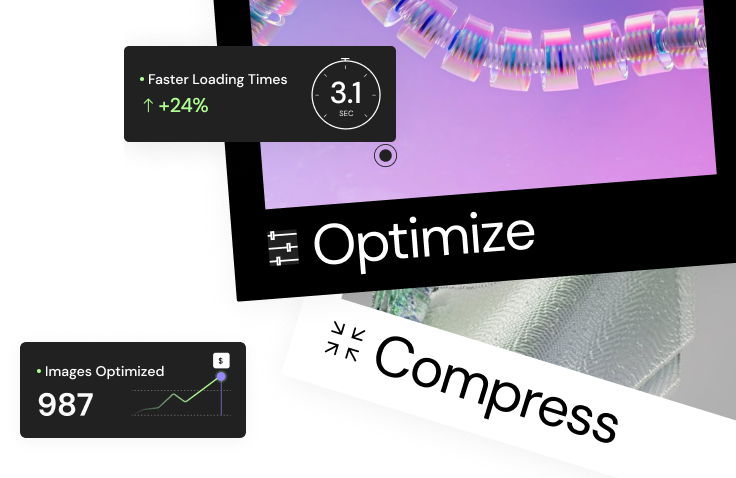
- Optimization: It includes built-in tools for image compression and caching.
This integration means everything works together perfectly out of the box. You log in, and you build.
The Atomic Editor (V4)
While Site123 restricts you to blocks, the Elementor Editor offers “Atomic Design” capabilities. This is why it is the preferred tool for designers who demand precision.
- Pixel-Perfect Freedom: You can drag any widget to any specific coordinate. You can adjust margins, padding, Z-index, and motion effects.
- Flexbox & Grid: For the technically inclined, Elementor utilizes modern CSS Flexbox and Grid containers, allowing for complex, responsive layouts that adjust fluidly to any screen size.
- Editor Pro Widgets: Access over 86 advanced widgets, including animated headlines, price tables, countdowns, and form builders, without needing extra plugins.
- Global Design Systems: Define your typography, colors, and button styles once, and they apply globally. Change a font in the Site Settings, and it updates across 100 pages instantly.
Comparative Analysis: Site123 vs. Elementor One
Let’s break down the differences across the four pillars of a successful website: Design, Performance, Intelligence, and Commerce.
Design & Customization
- Site123: You choose a template and fill in the blanks. The structure is immutable. It ensures you can’t make mistakes, but it also ensures you can’t stand out.
- Elementor One: You have a blank canvas or access to a professional library of templates. You can control the layout of the Header, Footer, Archive Pages, and Single Post templates via the Theme Builder. You can create dynamic templates that automatically populate with data from your content.
- Explore the Elementor Editor.
- See the power of Theme Builder.
Hosting & Performance
- Site123: Hosting is opaque. You are in a shared environment where your site’s speed can be affected by other users.
- Elementor One: Your site lives on Elementor Host.
- Infrastructure: Built on Google Cloud Platform (C2) servers, known for their high-compute performance.
- CDN: Integrated Cloudflare Enterprise CDN delivers your content from servers closest to your visitors, reducing latency.
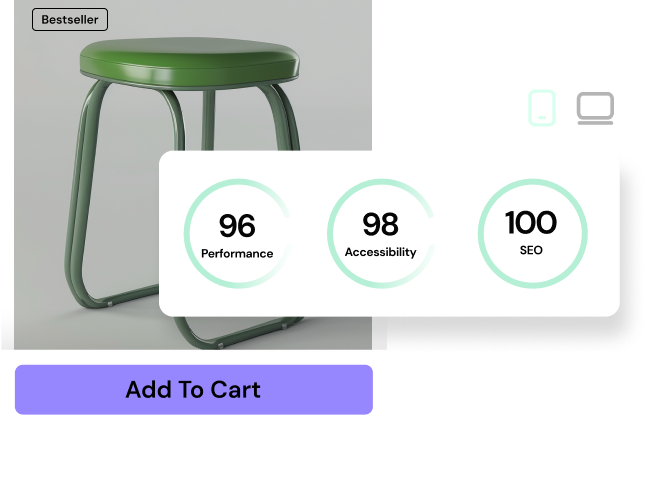
- Speed: Consistently ranked #1 in Core Web Vitals with a Time To First Byte (TTFB) of under 110ms.
- Security: Includes premium SSL, DDoS protection, and a Web Application Firewall (WAF) standard.
- Learn about Elementor Hosting.
Intelligence: Text Generation vs. Agentic AI
- Site123: Offers basic AI writers that can generate paragraphs of text based on a prompt. It’s a useful shortcut for copywriting.
- Elementor One: Introduces Angie, converting the platform into a robust AI website builder that does more than just write.
- What is Angie? Angie is an “Agentic AI” utilizing Model Context Protocol (MCP). She is not just a chatbot; she is a worker.
- Capabilities: You can ask Angie to “create a new landing page for the summer sale,” “install a specific marketing plugin,” or “update the pricing on all product pages.” Angie understands the context of your site and executes actions directly within WordPress.
- Context Aware: Unlike generic AI, Angie knows which plugins you have installed, what your design system looks like, and how your site is structured.
- Meet Angie.
E-commerce: Store vs. Empire
- Site123: Good for a boutique with 10-20 products. Customization of the checkout experience is rigid.
- Elementor One: Leveraging the WooCommerce Builder, you can build a massive e-commerce empire.
- Visual Building: Design your Product pages, Cart, and Checkout visually. No coding required.
- Unlimited Scale: List 10 products or 100,000. WooCommerce scales with you.
- Ecosystem: Connect to any shipping provider (FedEx, UPS, DHL), any payment gateway (Stripe, PayPal, Square, Authorize.net), and any marketing tool (Mailchimp, Klaviyo).
- Check out the WooCommerce Builder.
- See E-commerce Hosting.
The Cost of Ownership Analysis
Evaluating cost requires looking beyond the monthly fee to the “Total Cost of Ownership” (TCO).
The “App Tax” of Closed Platforms
On platforms like Site123, you often pay a premium for convenience.
- Transaction Fees: Many builders charge a percentage fee on every sale you make, on top of the payment gateway fees.
- Add-on Costs: As you grow, you may need to pay for premium apps to add simple functionality like a popup or a better form.
The Elementor One Credit System
Elementor One introduces a revolutionary Flexible Credit System.
- Unified Value: Instead of paying for separate subscriptions for an AI writer, an image optimizer plugin, and an accessibility tool, you get a pool of monthly credits (e.g., 25,000 credits).
- Fluid Usage: One month, you might use your credits to have Angie build a new site structure. The next month, you might use them to optimize 2,000 images with the Image Optimizer. Next, you might use them to scan your site for accessibility issues with Ally.
- Efficiency: This ensures you are never paying for shelf-ware. Your budget goes exactly where your focus is.
Hosting Without Hidden Costs
With Elementor Host, there are no “teaser rates.”
- No First-Year Gimmicks: Many hosts offer $2.99/month for the first year, then renew at $14.99/month. Elementor’s pricing is transparent and reflects the enterprise-grade Google Cloud infrastructure you are receiving.
- Inclusions: You get Elementor Core (Free) pre-installed, Site Mailer for reliable transactional emails (saving you the cost of a separate SMTP service), and daily backups.
Starting Right: Migration and Planning
If you have realized that a “simple” builder is too restrictive, the next logical step is to build on a professional foundation. Elementor One makes this transition accessible, even for beginners.
Step 1: Planning with AI
You do not need to be an architect to build a house. The AI Site Planner acts as your digital architect.
- Consultation: You chat with the AI about your business goals, target audience, and desired vibe.
- Blueprint: The planner generates a comprehensive sitemap and wireframes for your site.
- Creation: With one click, it builds the entire structure in the Elementor Editor, ready for your content.
Step 2: Choosing Your Foundation
For a professional site, the theme matters.
- Hello Theme: We recommend the Hello Theme. It is a lightweight, blank canvas designed specifically for Elementor. It loads instantly and carries no “bloat,” giving you maximum performance.
- Hello Biz: For business owners who want a head start, the Hello Biz child theme includes specialized “Business Kits”—pre-designed sections for services, teams, and portfolios that look professional immediately.
Step 3: Moving Your Content
Since Site123 does not allow exports, you will be copying your text and images. Treat this not as a chore, but as an audit.
- Refresh Your Copy: Use Elementor AI within the editor to rewrite and improve your old website copy. Adjust the tone, fix grammar, and make it more persuasive.
- Enhance Your Visuals: Use the built-in AI image generation to create unique assets that replace the stock photos you used on the old site.
Why Ownership Matters for SEO and Value
Finally, we must discuss the long-term value of your digital asset. A website on a closed platform is difficult to value because it is tied to that specific ecosystem.
Search Engine Optimization (SEO)
Google prefers fast, well-structured, and accessible websites.
- Clean Code: Elementor generates clean, semantic HTML that search engines can easily crawl.
- Performance: With Image Optimizer converting assets to WebP and Elementor Host providing lightning-fast server responses, you signal to Google that your site offers a premium user experience.
- Control: You have full control over your schema markup, canonical tags, and URL structure—things often locked down on simple builders.
Business Valuation
If you ever decide to sell your business, having a portable, self-hosted WordPress site is a tangible asset. A site locked into a proprietary builder is a liability because the new owner cannot easily move it to their own infrastructure. Building on Elementor One is an investment in the equity of your business.
Conclusion: Good vs. Great
So, returning to the core question: Is Site123 a good website builder?
For the user who needs a webpage for a school reunion, a temporary event, or a personal hobby, yes. It is “good.” It functions, it is easy, and it requires zero learning curve.
But if you are a business owner, a creator, or an entrepreneur, “good” is the enemy of great. You do not need a tool that limits you; you need a platform that propels you.
Elementor One is that platform. It combines the ease of use you crave with the power you need. It gives you Angie to handle the heavy lifting, Editor Pro to realize your design vision, and Elementor Host to ensure the world sees your work instantly. Most importantly, it gives you ownership.
Don’t settle for renting a template. Build a digital future that belongs to you.
Get started with Elementor One today.
FAQ
1. Is Site123 really free? Site123 offers a free plan, but it is highly restrictive. It places a permanent banner ad on your site and forces you to use a subdomain (like site123.me/site), which looks unprofessional. To connect your own domain, remove ads, or use e-commerce features, you must upgrade to a paid plan.
2. Can I move my Site123 website to WordPress later? No, Site123 is a closed, proprietary platform. There is no “export” button to move your site to WordPress or Elementor. If you decide to switch later, you will have to rebuild your site from scratch and manually copy over your text and images. This is why starting on an open platform like Elementor is recommended.
3. Does Elementor Host include Editor Pro? Elementor Host plans come with Elementor Core (Free) pre-installed. They do not automatically include an Editor Pro license, though many users choose to bundle them or purchase a Pro license separately to unlock advanced widgets and theme-building capabilities. You can try the core features with a free download before upgrading.
4. What makes Angie different from other AI tools? Most AI tools in website builders are just text generators. Angie is an “Agentic AI” that uses Model Context Protocol (MCP). She acts like a virtual employee who can perform complex actions—like creating pages, installing plugins, or updating settings—directly within your WordPress dashboard, rather than just suggesting text.
5. Is Elementor difficult for a complete beginner? Elementor is designed to be accessible. While it is a professional tool, features like the AI Site Planner allow beginners to generate a complete website structure in minutes. The Hello Biz theme also provides “Business Kits” that help you get a professional look without needing design skills.
6. Why is Elementor Host better than cheap shared hosting? Cheap shared hosting packs thousands of websites onto one server, leading to slow speeds and security risks. Elementor Host runs on Google Cloud Platform (C2) with Cloudflare Enterprise CDN. This is enterprise-grade infrastructure that ensures your site remains fast and secure, even during traffic spikes.
7. Can I sell products with Elementor? Yes. Elementor integrates deeply with WooCommerce, the world’s most popular e-commerce platform. The WooCommerce Builder (part of Editor Pro) allows you to visually design every part of your store—from product pages to the checkout flow—giving you complete control over your customers’ journey.
8. How do the “One Credits” work? Elementor One gives you a monthly pool of shared credits. You can use these credits across different tools depending on your needs. One month, you might use them for Angie to build layouts, and the next month for Image Optimizer to compress your media. This flexibility ensures you get value every month.
9. Is Elementor good for SEO? Yes, Elementor is excellent for SEO. It generates clean code and allows full control over HTML tags. Furthermore, the performance benefits of Elementor Host and Image Optimizer improve your Core Web Vitals, which are a key ranking factor for Google.
10. What happens if I stop paying for Elementor? Because Elementor is built on WordPress, you own your data. If you stop paying for Editor Pro, your site remains live and visible. You simply lose access to the premium editing features and updates. Your content, however, remains yours—unlike Site123, where stopping payment can result in your site being taken offline.
Looking for fresh content?
By entering your email, you agree to receive Elementor emails, including marketing emails,
and agree to our Terms & Conditions and Privacy Policy.